Klinische Entscheidungsunterstützung
Soteria Compute platform
Vitalparameter in klinische Hinweise übersetzen.
Soteria verarbeitet Vitalparameter zur Einschätzung des Risikos eines erhöhten qSOFA-Scores. Die Ergebnisse können über Schnittstellen in der elektronischen Patientenakte bereitgestellt werden.

Context
At a glance.
Eingangsdaten
Systolischer Blutdruck, Puls, Atemfrequenz und Sauerstoffsättigung.
Verarbeitung
Modellbasierte Risikobewertung als zusätzliche Information für die klinische Beurteilung.
Im Arbeitsablauf
Ergebnisse über die HL7-Integration in der Patientenakte zugänglich machen.
Die gespiegelten Texte nennen unterschiedliche Aktualisierungsintervalle (10 bzw. 15 Minuten). Zeit- und Leistungsangaben der Quelle sind hier nicht als aktuell validierte Produktzusagen übernommen.
How it works
Follow the workflow.
Vitalparameter
Klinische Beobachtungen
Soteria
Modellbasierte Bewertung
HL7-Integration
Übermittlung der Ergebnisse
Patientenakte
Information im Arbeitsablauf
Conceptual diagram · not live data
Insights from the source
In the video.
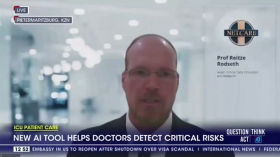
eMedys Video / PeerTube
Background: sepsis
Clinical background on early sepsis recognition, linked from the original page.
A connection to eMedys Video / PeerTube is made only when you load the video. Start playback in the player.
Explore the details
The original article.
The original service-desk article is preserved below. The editorial context above explains the service; statements in the source reflect its publication date.
Read original article Content & documentation
Soteria Sepsis Prediction Platform
Overview
The Soteria Sepsis Prediction Platform is an advanced clinical decision support system that uses artificial neural networks (ANN) to predict sepsis risk in real-time across healthcare environments. Designed for seamless integration with electronic medical record systems, Soteria empowers clinicians to identify high-risk patients early and intervene before sepsis progresses to life-threatening stages.
How It Works
Soteria continuously analyzes patient vital signs data to predict the probability of a patient developing a quick Sequential Organ Failure Assessment (qSOFA) score ≥2 within an 8-to-10 hour window. The platform processes four key vital signs:
- Blood Pressure (Systolic)
- Pulse Rate
- Respiratory Rate
- Oxygen Saturation (SpO2)
Using sophisticated machine learning algorithms, Soteria generates a risk probability score (0-100%) that serves as an early warning indicator for potential sepsis development.
Key Features
Real-Time Monitoring
- Continuous 24/7 patient data processing
- Updates every 15 minutes during operational hours
- Supports up to 2,500 concurrent patients or points of care
Intelligent Alert System
Color-coded risk scoring for quick clinical assessment:
- Red (≥75%) - High risk, immediate attention required
- Orange (60-74%) - Elevated risk, close monitoring needed
- Yellow (40-59%) - Moderate risk, continued observation
- Green (<40%) - Low risk
EMR Integration
- Seamless integration with CareOn and other electronic medical record systems
- Passive visual alerts within patient charts
- Bidirectional data flow for comprehensive patient tracking
- HL7 messaging support for healthcare system interoperability
Clinical Interface
- User-friendly dashboard for clinicians
- Comprehensive patient overview with trend analysis
- Integrated observation charts displaying scores alongside vital signs
- Feedback mechanism for continuous model improvement
Technical Capabilities
Robust Architecture
- Hybrid scoring approach with intelligent fallbacks (ANN → linear → rule-based)
- Statistical outlier detection using IQR methods
- Oracle and PostgreSQL database integration
- Cross-platform compatibility (Windows/Linux)
Data Security & Compliance
- Industry-standard security measures
- Comprehensive audit trails and logging
- Daily automated backups
- Disaster recovery protocols
- FDA Clinical Decision Support guidance alignment
Monitoring & Support
- Automated health reporting
- Telegram-based notification system
- Comprehensive logging with Winston
- Location-specific configuration management
Clinical Benefits
- Early Detection: Identifies sepsis risk 8-10 hours in advance
- Improved Outcomes: Enables timely intervention before critical deterioration
- Evidence-Based: Supports adherence to Surviving Sepsis Campaign guidelines
- Workflow Integration: Works within existing clinical workflows without disruption
- Continuous Learning: Incorporates clinical feedback to improve prediction accuracy
Target Environments
Soteria is deployed across intensive care units (ICUs), emergency departments, and general hospital wards, with particular focus on high-acuity patient populations where early sepsis detection can significantly impact outcomes.
Support Resources
For technical support, implementation guidance, or clinical questions about the Soteria platform, please don't hesitate to contact our support team or refer to the detailed documentation sections on this website.
Soteria is a registered clinical decision support platform. CareExcel Inc owns all intellectual property rights.